


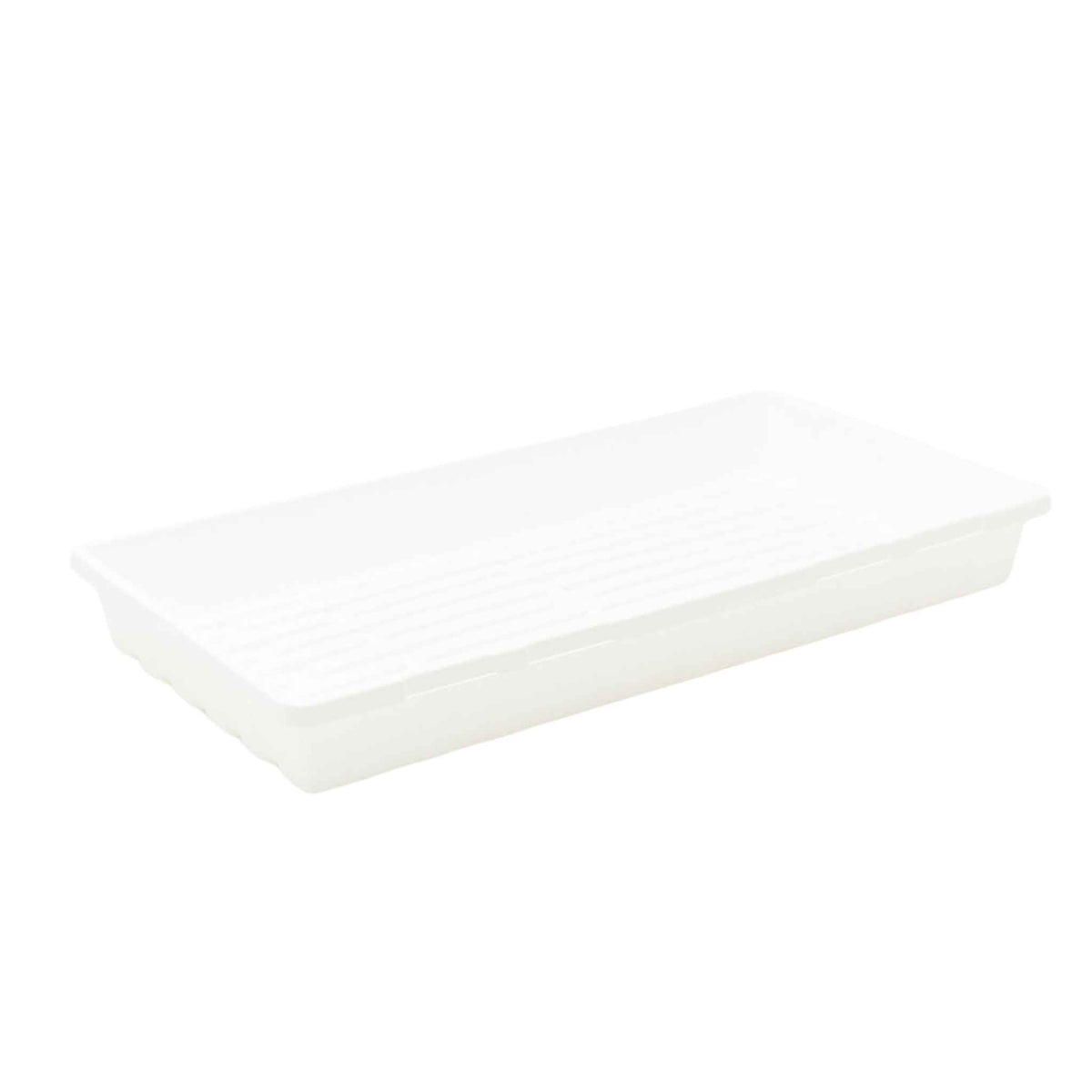
Bootstrap Farmer® 1020 Deep Microgreen Trays NZ
Bring durability and versatility to your gardening or market setup with Bootstrap Farmer® 1020 Deep Trays. Made from extra-strong, food-safe, BPA-free polypropylene (#5), these heavy-duty trays are built to last year after year, saving you time and money on replacements. We're an authorised NZ stockist and we run Bootstrap Farmer equipment every day on our own vertical farm in Ashburton.
Perfect for market farmers, hobby growers, or anyone cultivating microgreens, wheatgrass, fodder, or hydroponic crops, these deep trays provide extra soil depth for larger root systems or extended growth cycles. Available in multiple colours, hole options, and pack sizes, they are ideal for both practical use and eye-catching displays.
Deep or shallow?
Most microgreens grow well in our standard 1020 shallow trays. Choose a deep tray for seedlings, larger root systems and longer grow cycles. Not sure? Our guide on how deep microgreen trays should be explains the difference.
Key Features
- Made in the USA with high-quality, food-safe PP #5 plastic
- Extra-thick, heavy-duty construction for long-lasting use
- 2-year warranty against breakage under normal growing conditions
- Great for farmers’ markets, home gardening, photos, or gifts
- Outer dimensions: 53.6 cm x 27.9 cm x about 6 cm deep
- Inner bottom dimensions: 50.3 cm × 23.9 cm
- Colour options: black, white, purple, green, blue, orange or pink
- Variants available with holes or solid bottoms, and pack sizes of 1, 5, 15, or 30 trays
- Bulk discount by pack size: the larger the pack, the lower the price per tray
Why we chose Bootstrap Farmer
We've tested almost every standard microgreen tray available in New Zealand. These are the ones we run every day on our own vertical farm in Ashburton.
- Built to last: extra-thick, heavy-duty walls and a 2-year replacement warranty under normal use.
- Colour coding: black, white, purple, green, blue, orange or pink, so you can organise crops and workflow at a glance.
- Fits the system: standard 1020 footprint. Use a no hole deep tray under a holed deep tray for bottom watering, and keep to the same depth when nesting.
- Bulk discount by pack size: choose a 5, 15 or 30 pack and the price per tray drops as the pack gets bigger.
- Local support: Ashburton pickup or fast NZ shipping, with advice from growers who use these trays daily.
Keep reading: the Bootstrap Farmer sizing guide and our tray system guide.
Note: Store trays out of direct sunlight when not in use to prevent material degradation.